
The Timeless Elegance of Handloom Sarees: A Buyer's Guide
There is a particular kind of quiet luxury in a handloom saree — one that has nothing to do with logos or trends and everything to do with the hours of human hands that went into it. Long before "sustainable fashion" became a marketing phrase, handloom weaving was already sustainable by nature: slow, deliberate, and rooted in techniques passed down through generations of weaving families across India. For anyone shopping for a saree today, understanding what makes a handloom piece different — and how to choose one well — can turn a purchase into something closer to an investment in craftsmanship.
What Makes a Saree "Handloom"
The term "handloom" refers specifically to sarees woven on traditional, manually operated looms, as opposed to power looms that mechanise the weaving process. Every handloom saree carries small, deliberate irregularities — a slightly uneven border, a subtle shift in weave density — that are actually markers of authenticity rather than flaws. A power-loom saree, by contrast, is machine-perfect and produced at a fraction of the time and cost, but it lacks the depth, texture, and individuality that comes from a human weaver making constant micro-decisions throughout the process.
This is part of why brands built around handloom curation, like Thousand Threads, emphasise craftsmanship and authenticity as core values rather than just aesthetics. Founder Shilpa Selvaraj built the label on the belief that a saree is more than fabric — it carries a story, a legacy, and an expression of the identity of the woman wearing it. That philosophy shapes how a curated handloom collection gets assembled: not chasing volume, but hand-selecting pieces for their craftsmanship, fabric quality, and detailing.
Understanding the Major Weave Types
Walking into the world of sarees for the first time can be overwhelming — there are dozens of regional weaving traditions, each with its own history and characteristics. A few of the most sought-after types worth understanding:
Kanjeevaram (Kanchipuram) sarees originate from Tamil Nadu and are considered among the most prestigious silk weaves in India. Known for their rich, thick silk, contrasting borders, and intricate temple-inspired motifs, Kanjeevaram sarees are often reserved for weddings and major celebrations. Their durability is legendary — a well-cared-for Kanjeevaram can genuinely last generations.
Handloom cotton sarees offer a lighter, breathable alternative suited to daily wear or warm-weather occasions, while still carrying the texture and character of hand-weaving. These are often favoured by women who want the authenticity of handloom craftsmanship without the formality of silk.
Linen sarees have grown in popularity for their crisp drape and comfort, particularly for daytime events, office wear, or casual festive occasions where silk might feel too heavy.
Mul mul cotton sarees are prized for their soft, almost gauze-like texture — a fabric traditionally associated with comfort and gentle elegance, often chosen for its breathability in warmer climates.
Sungudi sarees, a specialty closely associated with Madurai in Tamil Nadu, are known for their distinctive tie-dye technique and vibrant, dotted patterns — historically a favourite for festive occasions like Onam, where their bright, celebratory character fits the mood of the season.
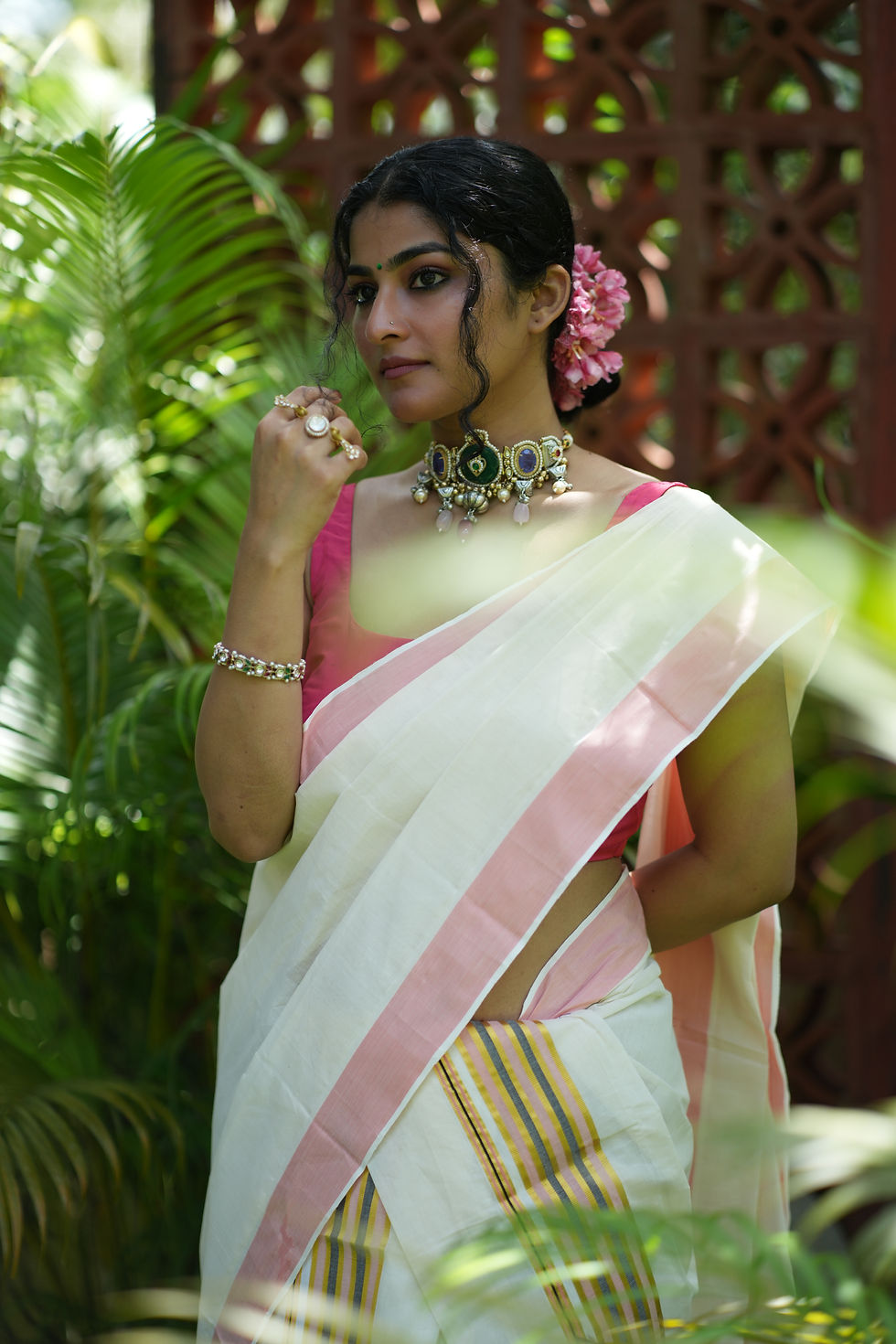
Set Mundu, a traditional Kerala drape, represents an entirely different silhouette — a two-piece garment with a rich heritage tied specifically to Kerala's cultural dress traditions, often worn during Onam and other regional festivities.
What to Look for When Buying
For a first-time buyer, a few practical checkpoints can make the difference between a saree that feels special for years and one that disappoints after a single wash:
Check the border and pallu closely. Hand-woven zari (metallic thread) work should feel slightly raised and textured, not flat or printed.
Feel the fabric weight. Genuine silk has a particular density and slight stiffness; overly light or slippery fabric can indicate synthetic blends.
Look for slight irregularities. Counterintuitively, small imperfections in the weave are often a good sign — they suggest genuine hand-loom work rather than mass production.
Ask about the source. Reputable curators are transparent about which region and weaving community a saree comes from, since authenticity is tied directly to provenance.
Consider the occasion first, fabric second. A heavy Kanjeevaram silk might overwhelm a daytime lunch, while a light linen or cotton saree might feel underdressed for a formal wedding.
Why Curated, Limited Collections Matter
One of the quieter advantages of shopping from a boutique, curated saree label rather than a mass retailer is scarcity by design. When a collection deliberately stays limited — hand-picking only the finest pieces for craftsmanship and detail — it protects against the diluted quality that often comes with scaling production. It also means a buyer is less likely to see the exact same saree on someone else at the next wedding they attend, which matters more to many women than they'd initially admit.
Thousand Threads' approach reflects this philosophy directly: rather than offering an overwhelming, ever-changing catalogue, the brand keeps its collection intentionally curated, choosing sarees specifically for the artistry and confidence they bring to the woman wearing them.
Caring for a Handloom Saree
A genuine handloom piece deserves proper care to last the decades it's capable of lasting:
Dry clean silk sarees, especially Kanjeevaram and other heavy silk weaves, rather than machine washing
Store folded in breathable cotton cloth, not plastic, to prevent moisture damage and colour bleeding
Refold along different lines periodically to avoid permanent crease lines in the silk
Keep zari-heavy borders away from direct sunlight for long periods, as it can dull the metallic thread over time
Air out silk sarees occasionally rather than leaving them sealed for months at a time
The Bigger Picture
Buying a handloom saree isn't just a fashion decision — it's a small but meaningful way of supporting weaving communities whose craft has been passed down for generations, often under increasing pressure from cheaper, mass-produced alternatives. Every handloom purchase is, in a very real sense, a vote for keeping that tradition economically viable.
For someone new to sarees, or for a longtime wearer looking to build a more intentional wardrobe, taking the time to understand weave types, fabric quality, and provenance transforms saree shopping from a purely aesthetic choice into an appreciation of craft. A well-chosen handloom saree isn't just something you wear to an event — it's something you keep, pass down, and remember buying.


Comments